
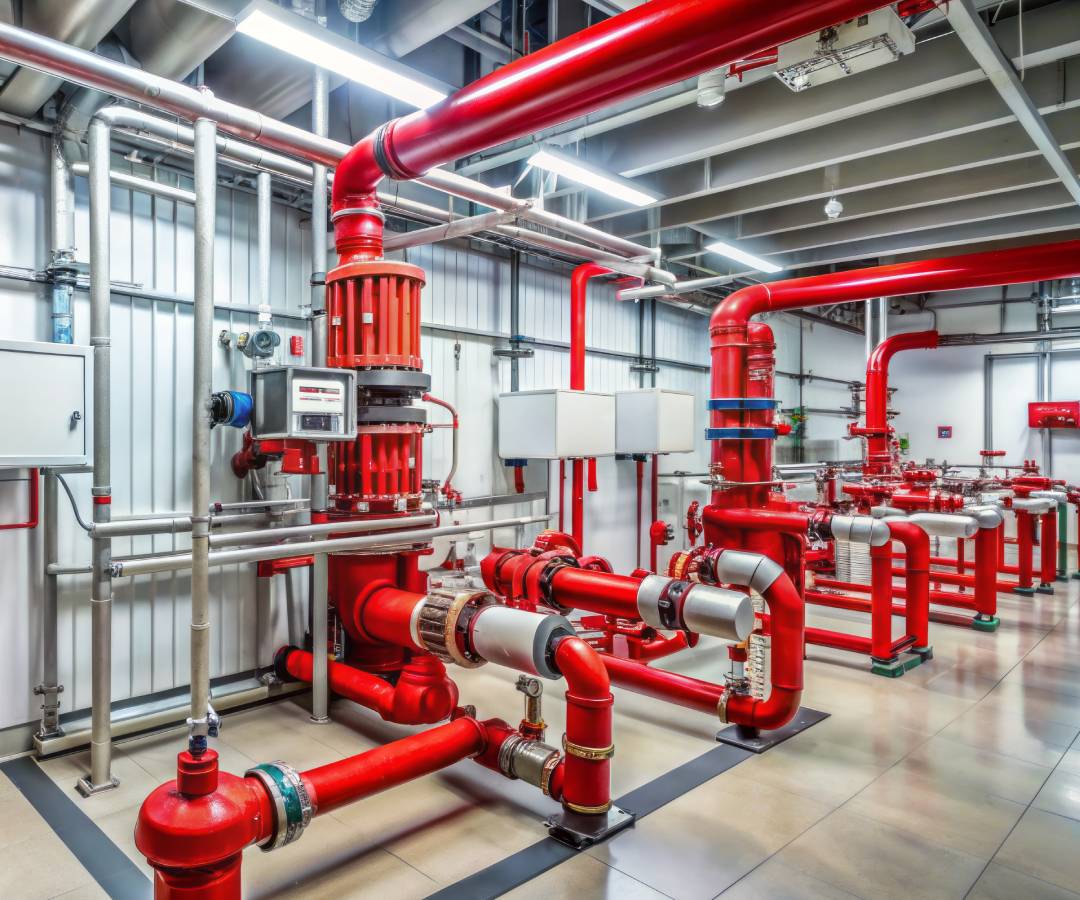
Fire Sprinkler Systems: Wet Pipe vs Dry Pipe vs Pre-Action
Wet pipe systems are usually the most cost-effective and fastest-responding option; dry pipe systems work better in unheated areas, while pre-action systems offer the highest protection against accidental discharge. Your facility’s temperature conditions, water sensitivity, and budget constraints determine the right choice.
Fast Facts
- Wet pipe systems activate in 30-60 seconds, while dry pipe systems take 1-2 minutes
- Accidental water discharge is reduced by up to 99% with pre-action systems
- Dry pipe systems cost roughly 15-25% more than wet pipe installations
- Specific system types are required by Manitoba building codes for certain facility classifications
- Water damage from false alarms affects 1 in 16 million sprinkler heads annually
Understanding the Basics
Commercial installations across Winnipeg are dominated by three main fire sprinkler types. Water is kept in the pipes constantly by wet pipe systems. Pressurized air is used instead by dry pipe systems, releasing water only when the sprinkler head is triggered by heat. Two separate events are required by pre-action systems before water flows.
All sprinklers are assumed to work the same way by most facility managers. They don’t. Specific building conditions and risk profiles were what each system was designed for. Response time, installation cost, and ongoing maintenance requirements are affected by the choice.
Wet Pipe Systems: The Standard Choice
Water sits in the pipes 24/7; it’s ready to flow immediately when a sprinkler head activates. Response time typically runs 30-60 seconds from heat detection to water discharge. Installation costs stay lower since the system design is, in a way, straightforward.
Heated buildings where freezing isn’t a concern work well with these systems. A restaurant kitchen in downtown Winnipeg, for example, benefits from the fast response time. The trade-off involves potential water damage if a pipe breaks or a head activates accidentally. Over time, this risk is accepted by most commercial property owners for the speed advantage.
Dry Pipe Systems: Cold Weather Protection
The pipes are filled with pressurized air or nitrogen instead of water. When heat activates a sprinkler head, air pressure drops and water is allowed to flow through the system. Response time increases to 1-2 minutes since air must be purged first.
Freeze damage in unheated warehouses, loading docks, or parking garages is prevented by these systems. A mining facility outside Winnipeg might use dry pipe systems in equipment areas that aren’t climate controlled. Additional air pressure monitoring equipment causes installation costs to run higher. Maintenance gets more complex since both water and air systems are being managed.
Pre-Action Systems: Maximum Control
Water flows only after two separate triggers are activated. Typically, a fire detection system must signal AND a sprinkler head must be activated by heat. Manual activation is required as the second trigger by some systems instead.
Pre-action systems are often chosen by data centers, server rooms, and facilities with water-sensitive equipment. Accidental water discharge is virtually eliminated by the dual trigger requirement. A Winnipeg hotel might install pre-action systems in areas with expensive electronics or irreplaceable documents. Cost runs significantly higher than other options, but the protection against false alarms justifies the expense for many operators.
Making the Right Choice for Your Facility
The decision is driven by building use, climate conditions, and water sensitivity. Wet pipe systems are usually installed in heated commercial buildings for speed and cost efficiency. Dry pipe systems are needed by unheated areas to prevent freeze damage.
Pre-action system costs are often justified by facilities with expensive equipment or water-sensitive materials. The choice is sometimes dictated by fire codes based on occupancy classification and building height. From what we’ve seen, a second opinion before committing to expensive installations benefits most Winnipeg facility managers. To be fair, it’s a complex decision.
Getting Professional Assessment
Life safety and property protection for decades are affected by fire sprinkler system selection. Code compliance requirements change, and installation quality varies significantly between contractors. Multiple options are compared by smart facility managers before decisions are made.
Transparent assessments and digital tools that simplify the selection process are provided by Freedom Fire. Property owners are helped by our second opinion service to avoid overcharging and code compliance is ensured without the usual hassles. Visit our website to get started with a straightforward evaluation of your facility’s needs.
Mini-FAQ
Q: Which system responds fastest to fire? Water is already in the pipes, so wet pipe systems activate quickest. Time is needed by dry pipe systems to purge air first. That still surprises people.
Q: What’s the main advantage of pre-action systems? Look, accidental water discharge is prevented by them. Two separate triggers must activate before water flows. Expensive but worth it for data centers or museums.
Q: How much more do dry pipe systems cost? Fair point to ask upfront. Installation runs 15-25% higher than wet pipe. Maintenance costs more too since air pressure monitoring is what you’re dealing with.
Q: Are there restrictions on which system I can use? Funny enough, yes. Requirements are specified by Manitoba fire codes based on building use and occupancy type. Some facilities don’t get a choice.